Audio · PIMP MY TRACK

Mix + Master

Each track in your production is analysed and treated in the context of the composition. We work on focus and the fit between elements to bring out the strengths of your music, guided by its identity and release goals.

Request a quote
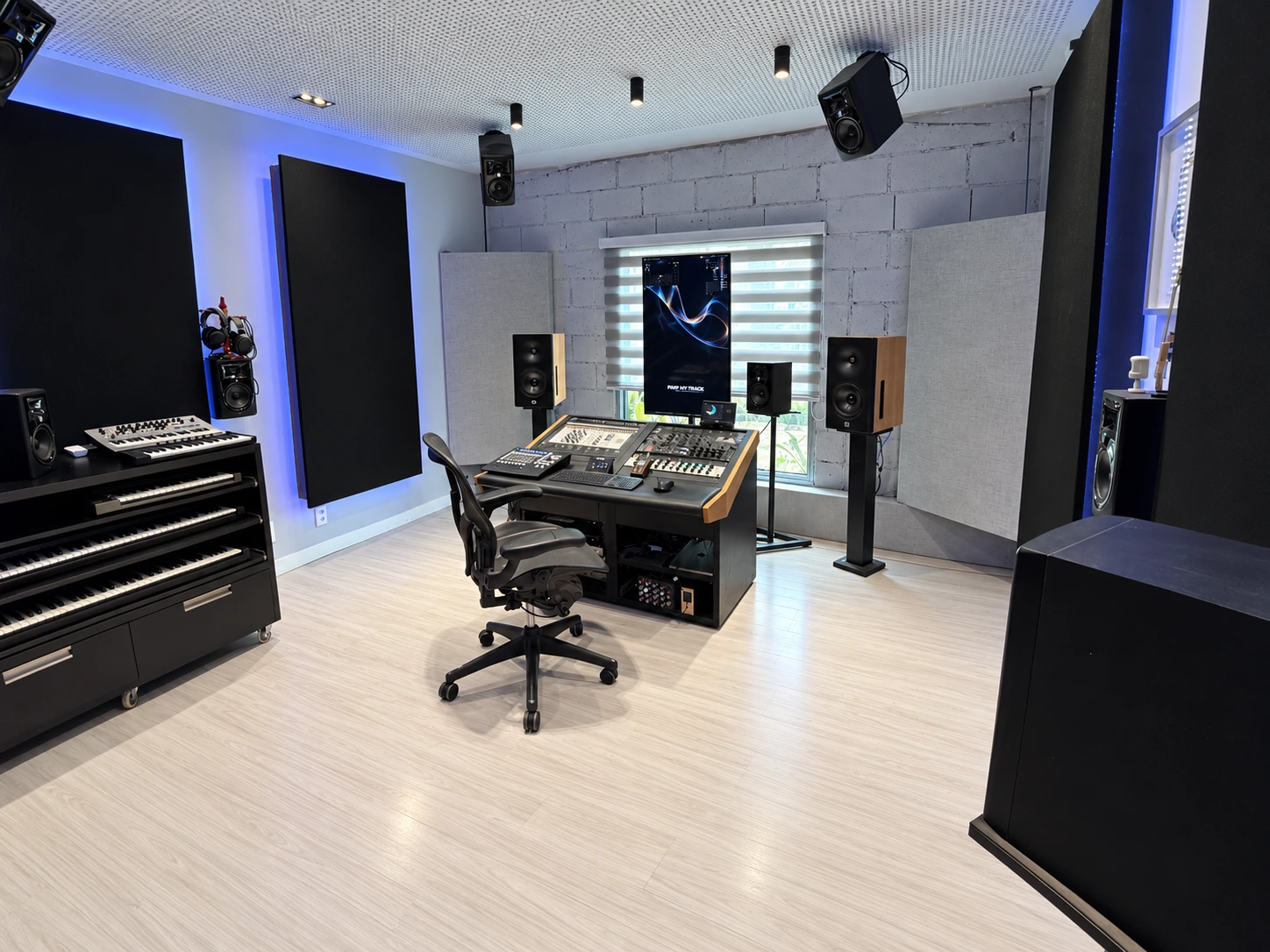
Side view of the studio and console

How it works

Track-by-track mixing addresses phase and polarity relationships, spectral balance and masking between elements. Decisions are made in the context of the arrangement: kick and bass interaction, definition of the main elements and the distribution of energy throughout the track guide the process.

Resonances, transients and dynamic envelopes inform EQ, compression and saturation where the material calls for them. Processing considers each track and the interaction between groups, aiming for control, density and impact while preserving the intent of the production.

Stereo placement, depth and spatial effects bring focus and separation to the composition. We check mono compatibility and translation across playback systems, guided by the genre, references and release destination.

Starting material

Ableton Live project with original sources preserved

Recommended for music produced in Ableton. Preserve the instruments, samples and original files. Freeze compatible tracks without using Flatten, and include safety renders of essential parts where agreed.

The Live version, plug-ins and project files are checked before work begins. Send the full project folder using Collect All and Save, together with your premix. Collect All and Save gathers media but does not copy plug-ins.

Individual tracks exported from your session

We accept time-aligned audio exports of individual tracks, accompanied by the artist’s premix and without master-channel processing. Preserve creative processing that defines the music. If groups or the master contain essential automation or effects, agree the required renders with the studio: bus processing cannot simply be applied to each separate track to reproduce the same result.

Individual tracks (multitracks) and groups of tracks (stems) are different source materials; their organisation is agreed in the quote.

Versions and revisions

Includes the original version and one extra version supplied by the artist, such as a Radio Edit, Dub Mix or Instrumental. Original Mix and Radio Edit, for example, must share the same mix structure, tracks and track names; they may be arranged side by side in the session. Creating a new Radio Edit arrangement is an extra to include in the proposal.

Includes up to two revisions of the mix and master. Sending or replacing stems may be part of a revision; changes to production, arrangement or scope need to be reviewed and agreed in the proposal.

Project scope

  • Stereo mixing and mastering: up to 50 tracks
  • Stereo mixing and mastering: 51–80 tracks
  • Stereo mixing and mastering: more than 80 tracks

Dolby Atmos packages

  • Mixing and mastering + Dolby Atmos Full
  • Mixing and mastering + Dolby Atmos Groups

Delivery format

Standard delivery: stereo WAV, 24-bit / 44.1 kHz. Input sample rate is agreed separately; advance conversion to the delivery rate is not required. Other formats and requirements are agreed for each project.

Next steps

  1. Introduce the project by email and share a listening link when agreed.
  2. Pimpo Gama reviews the material and agrees the scope, terms, deliverables and quote.
  3. After approval, full file delivery, availability and the start of work are arranged.
Tell us about your project

Frequently asked questions

File preparation, Dolby Atmos, revisions and delivery. Find guidance for your current stage of the project.

View all questions

File preparation

How should I send my Ableton Live session?

Name your tracks and groups, remove unused channels and use Collect All and Save to gather the audio files. Keep the source material and avoid flattening or bouncing over the original tracks. Agree on frozen tracks or audio exports for plug-ins the studio does not have. Include your rough mix and zip the project folder.

What is the difference between multitracks and stems?

Multitracks are the individual session tracks. Stems are groups such as drums, bass, synths and vocals. For Mix + Master, send individual tracks or the session agreed with the studio. For Stem Master, send up to eight aligned groups with the same start and duration, preserving your mix balance.

Why should I keep the original sources in my session?

Original sources let us revisit EQ, dynamics, sidechain and ambience before adding further processing. Some decisions become irreversible once a track has been rendered. Keeping the original channels gives us more room to make corrections during mixing.

Should I convert my files to 48, 96 or 192 kHz?

Increasing the sample rate cannot recover information missing from the original file. For stereo mastering, keep the session sample rate. For Dolby Atmos, confirm the export settings with the studio: we request tracks or groups at 48 kHz for this workflow.

Revisions and delivery

How do I request changes to my master?

Open the track in Listen in your Client Area and compare the versions. Mark passages that need changes, add notes and gather your comments before submitting a revision request. Included rounds and any additional charges follow your order’s agreed scope.

Can I include a Radio Edit or other versions?

List the versions in your order and clearly label each file. For mastering, an included edit must preserve the same mix and allow the same processing as the main version. A different mix or additional editing work may require an add-on. The scope is confirmed before work starts.

Which format will I receive for my stereo master?

The standard delivery is a stereo WAV at 24-bit / 44.1 kHz. Other sample rates, bit depths or versions are agreed in the order according to the release destination. Atmos and vinyl preparation have separate requirements confirmed during project review.